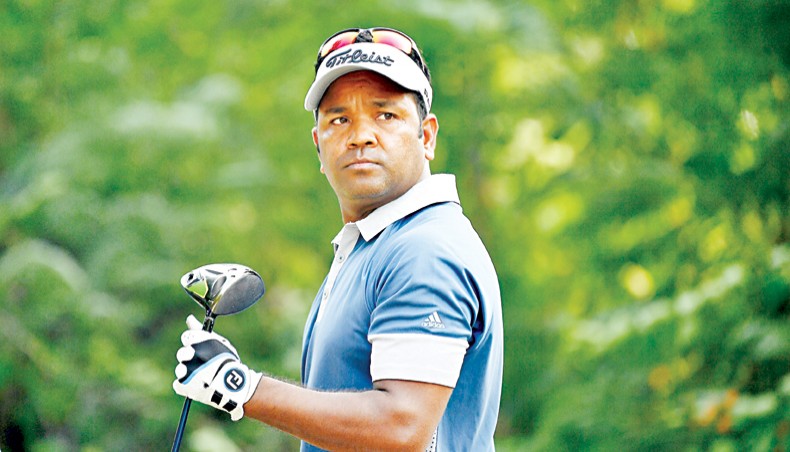
From the narrow streets of Dhaka to the lush fairways of the world, Siddikur Rahman’s journey is a story of resilience, faith, and relentless pursuit of a dream. Once a young ball boy chasing golf balls at Kurmitola Golf Club, he rose to become Bangladesh’s first Asian Tour champion and the nation’s first Olympian golfer. His life stands as a shining example that with hard work, patience, and belief, even the humblest beginnings can lead to global triumph.
Siddikur Rahman
Childhood Among the Greens
My name is Siddikur Rahman, and I was born on 20th November 1984 in Dhaka, Bangladesh. When I look back now, it still feels like a miracle how golf found me—or maybe how I found golf. I did not grow up in luxury, or even in comfort. My father drove an autorickshaw and took whatever small jobs he could find, and my mother worked endlessly at home to raise four sons. Life was tough. Every day was about survival.
At the age of 10, my mother decided that I had to help the family. She sent me to work at Kurmitola Golf Club as a ball boy. For a boy from Manikdi—an area many people dismissed as a “criminal’s den”—this was a strange new world. I had never seen such wide green fields, such neatly dressed men, such a calm sport. My job was simple: run after golf balls, pick them up, return them. That was how my story began.
I had never even heard the word “Olympics” then. To me, golf was just a way to earn a little money so I could stay in school and maybe put an extra plate of food on our table. Yet, without realizing it, something inside me was awakening. Watching the golfers swing, listening to the sound of the ball off the clubface—it fascinated me.
I didn’t have clubs, but that didn’t stop me. I picked up broken shafts, rusty heads, anything discarded, and built my own makeshift clubs. They were heavy, rough, awkward—but they were mine. I would mimic the swings I saw, sometimes barefoot, sometimes in the heat, sometimes in the rain. I wanted to feel like a player, not just a ball boy. Deep inside, a quiet dream was being born: What if I could become a golfer too?
Mondays Were My Paradise
At Kurmitola, there was a special rule: on Mondays, when the club was closed to members, caddies and ball boys were allowed to play. For me, those Mondays were heaven. It was the one day in the week when the course belonged to us. No pressure, no scolding, no running after balls—just us, a few boys with mismatched clubs, chasing a dream.
Life Journey
Every Monday, I lived for those hours. I played with everything I had. Slowly, the other boys and even some members started noticing me. They saw that I was serious, that I had something different in my eyes. I wasn’t there only for money. I was there because I had fallen in love with golf.
From Caddie to Junior Golfer
In 1999, Kurmitola Golf Club decided to form a junior golf team. They held a competition among the ball boys and caddies. More than a hundred boys turned up, but I played with a fire in my heart. I still remember gripping that makeshift club, telling myself: “This is my chance. Don’t let it go.” And I won. That was my first taste of victory. That year, at just 15, I won my very first caddie tournament. I cannot describe the feeling—I was no longer just a ball boy. I was a player.
From then, things changed. The club gave me support. I got the chance to play in amateur tournaments. One after another, I started winning—three Bangladesh Amateur Championships, and titles in Pakistan, Sri Lanka, Nepal, and India. For eight years, I dominated the amateur scene in South Asia. Every win gave me more belief that perhaps, just perhaps, this boy from Dhaka’s streets could make it big.
In 2006, I wore the Bangladesh jersey at the Asian Games in Doha. Representing my country for the first time was unforgettable. When I saw our flag in the athletes’ village, I felt tears in my eyes. I thought of my father in his autorickshaw, my mother working in the kitchen, my brothers watching from home. I told myself: “One day, I will take this flag to the world stage.”
Turning Professional – A New Battle
By 2005, I decided it was time to turn professional. I joined the Professional Golf Tour of India (PGTI) in 2006. It was the only option close to home. In India, I was just another rookie with little money and no sponsors. I traveled on buses, shared cheap rooms, and sometimes went hungry just to save enough for the next tournament. But I also worked harder than anyone. My first pro win came in Pune in 2008. It was not a glamorous event, but for me it was everything. I had proved I could win as a professional. Soon, more wins followed in India. My confidence grew.
Still, my eyes were on something bigger: the Asian Tour, the main professional circuit of the continent. In 2009, I earned my card. But then reality hit. I missed cuts. I lost money. I couldn’t afford tickets or hotels. More than once, I thought my career was over before it even began. And then, like angels, the members of Kurmitola Golf Club came forward. They raised money to buy me tickets for a few more tournaments. I will never forget their kindness. With that lifeline, I went to India, made the cut, and earned nearly USD 15,000. That money saved my career.
Breaking History
In 2010, something happened that changed my life forever. At the Brunei Open, I found myself in contention on the final day. My heart was pounding. I remembered all the Mondays I had played barefoot, all the times I had run after balls for others. Now the ball was in my hands.
I won.
I became the first Bangladeshi ever to win on the Asian Tour. For my country, it was front-page news. For my family, it was tears of joy. For me, it was proof that dreams do come true. Three years later, in 2013, I lifted another trophy—the Hero Indian Open. To win in India, against some of the best players of Asia, was special. By then, people were calling me the “Tiger Woods of Bangladesh.” I laughed at the nickname—I am only 5’5, and Tiger is a legend. But I understood what it meant. It meant I had put Bangladesh on the map of golf.
Olympic Dreams
If my 2010 win was history, then 2016 was destiny. That year, golf returned to the Olympics after more than a century. By then, I had climbed high enough in the world rankings to be in contention. A runner-up finish at the Mauritius Open sealed it. And just like that, I became the first Bangladeshi in history to qualify for the Olympics on merit. No wildcard, no invitation—just hard work and results. In Rio de Janeiro, I carried the Bangladesh flag in the opening ceremony. From the boy who once carried golf balls for others, I was now carrying my nation’s pride in front of the world. As I marched into Maracanã Stadium, I whispered a prayer: “Ya Allah, thank You for bringing me this far.” I didn’t win a medal. I finished 58th. But to me, the real victory was walking those fairways as an Olympian, hearing commentators say “Bangladesh” in the same breath as golf.
Trials and Injuries
Not everything has been easy. In 2015 and 2016, injuries struck. My back hurt, my wrist gave me trouble. I had to withdraw from the Bangladesh Open—my home tournament. It broke my heart. Sometimes I wondered if my time was over. But I kept fighting. I returned to win the City Bank Dhaka Open in 2018. And even in 2023, at nearly 40 years old, I showed flashes of my best—shooting an 8-under-par round in Thailand. The fire still burns.
For me, the greatest joy is seeing how golf has grown in Bangladesh. When I started, nobody cared about golf. Now, kids come to Kurmitola with stars in their eyes, saying they want to be like me. Even in my own home, my wife, Samaun Anjum Auroni, was inspired to become the first female professional golfer of Bangladesh. To see her chasing her own dreams makes me proud. I know I have carried this journey far, but I believe the next generation will take it further. My dream is that one day, a Bangladeshi will not only play in the Olympics, but also win a medal.
What Golf Taught Me
Golf taught me patience. It taught me humility. It taught me that talent is nothing without hard work. I started as a ball boy. I ran after others’ shots. I built clubs from scraps. I carried hunger in my stomach and dreams in my eyes. And yet, through Allah’s mercy, I stood on international podiums, I waved my country’s flag, I showed the world that Bangladesh can produce champions. Golf is a mind game. Only hard work and practice can make you better. That is the truth I carry in my heart every day.
Epilogue
When people ask me what my life means, I say this: I am proof that you don’t need privilege to dream big. You don’t need wealth to succeed. What you need is passion, patience, and faith. From ball boy to Asian Tour winner, from Dhaka slum to Olympic fairways—my journey is not just mine. It belongs to every boy and girl in Bangladesh who dares to dream. And so, as I continue to play, I carry one prayer in my heart:
Ya Allah, keep me humble, keep me strong, and let my story inspire others to believe that nothing is impossible.
Siddikur Rahman
Professional Golfer, Bangladesh
(PGA Tour, Asian Tour Champion)