Mitchel Lee
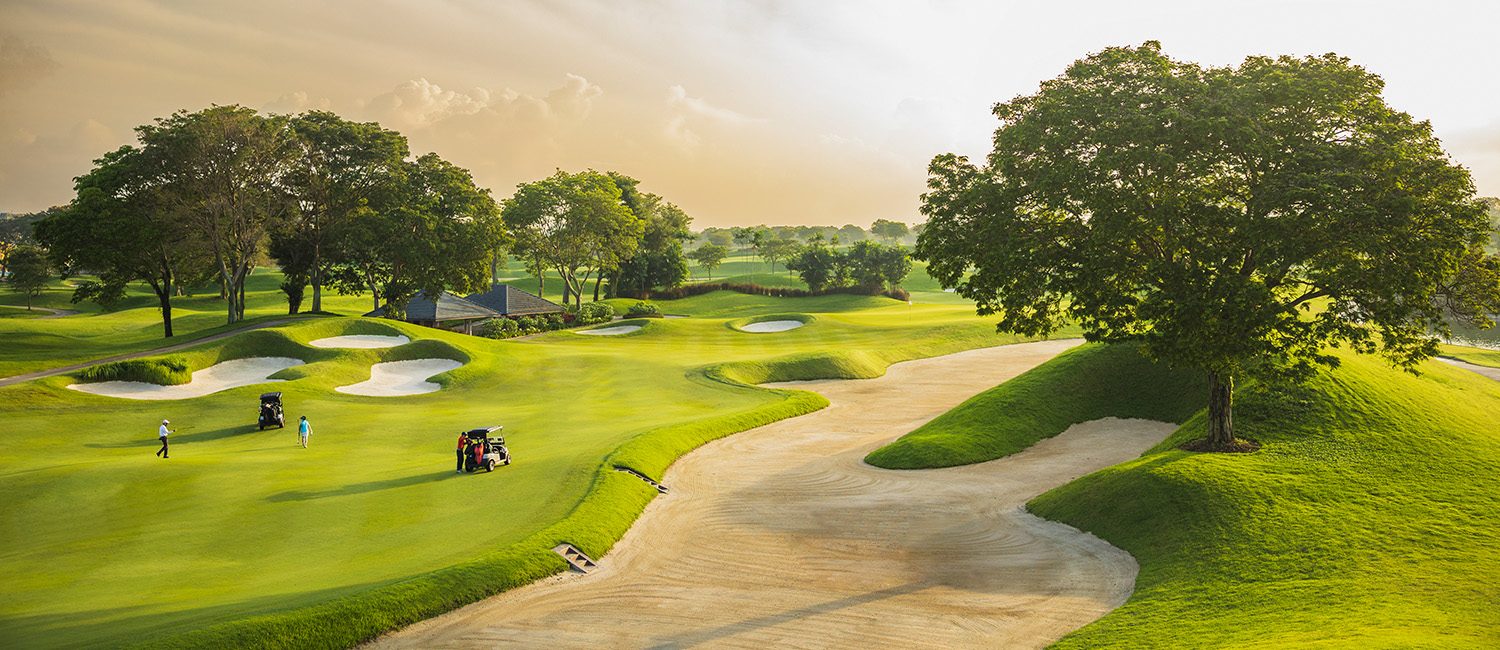
Singapore is a small island city state of around 700 plus square kilometres with a total resident population of 6 million people. Despite our limited space and growing population, over the years, the number of golf courses grew to as many as sixteen. However, in recent years, golf courses have been closing, and land has been acquired by the state for other uses. According to the Straits Times article of July 2025, Singapore’s Ministry of Law which oversees land policy announced that a further four courses will be reduced to twelve by 2035. This has led the golfing community to wonder if they are an “endangered species” in Singapore! Other Singaporeans celebrate this announcement as they believe that the land can be put to better use, be it for housing, recreation and commercial use. Harsher critics even argue that even twelve is a lot for a small country like Singapore.
Trade-Offs when Land is Used for Golf
Like many aspects of life in Singapore, golf and its enjoyment involves an opportunity cost. Arguably, most other land use activities have a greater need and that is more acute in a densely populated city like Singapore. As such, there was little criticism or push-back when an 18-hole golf course that belonged to Jurong Country Club had to be acquired by the state some years back to develop a railway depot for the Singapore-Malaysia high speed rail project. [The high-speed rail project was eventually cancelled by Malaysia]. Recently, an 18-hole golf course belonging to Keppel Golf Club in Singapore’s southern coast was acquired as part of plans to develop the “Greater Southern Waterfront” project - a new residential precinct which will have access to a continuous waterfront promenade with recreational facilities. In both these examples, the benefits to the wider community outweigh the loss of courses to the golfing community. This leads us to the question as to whether can golf survive in land-scarce Singapore.
Golf in Singapore: An Exercise in Land Management
Golf remains a thriving sport in Singapore and there remains numerous options to play in Singapore. Whilst most golf courses are private and exclusive, there are also opportunities for regular Singaporeans. How has the state managed this? Two significant things comes to mind.
First, the state exercised a holistic, long-term land management policy which sought to maximise the possibility for the best outcomes. One example was when the government removed a public golf course at the Marina Bay area for other land uses including a memorial to commemorate the nation’s founding leaders. The state compensated for the loss of this public course by cleverly taking away one of the private golf courses that belonged to the exclusive Singapore Island Country Club (it has three remaining courses) and leasing it for public use. Under the terms and conditions of the lease, members of the former Keppel Golf Club (who lost their course to the Greater Southern Waterfront Project mentioned earlier) could also use this course. This uniquely Singaporean way of optimising land use was primarily possible because of the Land Acquisition Act which allows the state to acquire land for national development purposes and provides a framework for monetary compensation to landowners.
Second, golf courses in Singapore often try to serve dual purposes given land constraints. For example, Singapore’s Island Country Club’s three golf courses were constructed around the Mandai nature reserves and served as a water catchment area to channel water to the Mcritchie Reservoir. Seletar golf course is also located within the Seletar Reservoir catchment area and thus integrated into Singapore’s water supply system. One can therefore argue that these courses serve an important second function critical to the wider national interest.
Third, the state also looks at preserving the golfing scene through ensuring that a good number of the remaining golf courses that remain are managed and maintained by social enterprises. In other words, Singapore tried to democratise the golf scene. For example, Singapore’s National Trade Union Congress (NTUC) comprising affiliated trade unions and associations runs and manages the 18-hole Orchid Country Club currently. While the club will lose this course in 2030, the government announced the creation of a new “centre of excellence” for the public in golf to ensure public access to golf facilities over the long-term. The course will be managed by the National Service Resort and Country Club (NSRCC) an entity which was created to provide affordable golf course access for members and guests of national servicemen. Currently, the NSRCC runs two golf courses in Kranji in the western part of Singapore and Changi, in the eastern part of Singapore.
Lessons for Dhaka?
Dhaka is also a very densely populated city with many competing needs for land-use. Singapore’s golfing scene could serve as a reference point as Dhaka seeks to grow the sport whilst optimising land for other purposes. Holistic land management by the appropriate land management authority would ensure that golf course development fits well with Dhaka’s long-term land use plans. Second, the state could also look into how existing golf courses and future ones could serve dual land use roles. Apart from water catchment, some countries have experimented with the flexible use of golf spaces. For example golf courses in Japan the US and Europe have been designed to serve as walking, jogging and other recreational or art spaces. Third, Bangladesh authorities and Dhaka residents should consider how to expand the accessibility of golf spaces to regular people and not just army personnel or the elite. Perhaps the ministry in charge of sports could work with the private sector to develop space (both literally and figuratively) for golf programmes to be developed for the middle class the youth and women. Democratising the golf game could divert some users and reduce demand for exclusive clubs. Obviously, prestige and networking will remain a big part of any golf scene and a growing Dhaka elite will continue to desire a fancy club membership of their own. Nevertheless, accessible golf and other recreational outlets for the masses are important aspects of a balanced land management system that seeks to balance competing needs. This should feed into a fairer and more equitable system to share the finite space that Dhaka residents reside in. I hope that this is good food for thought for Tiger Golf members. Happy golfing!
Mitchel Lee
Chargé d’Affaires
Singapore High Commission in Dhaka