Interview
Ambassador Saida Shinichi
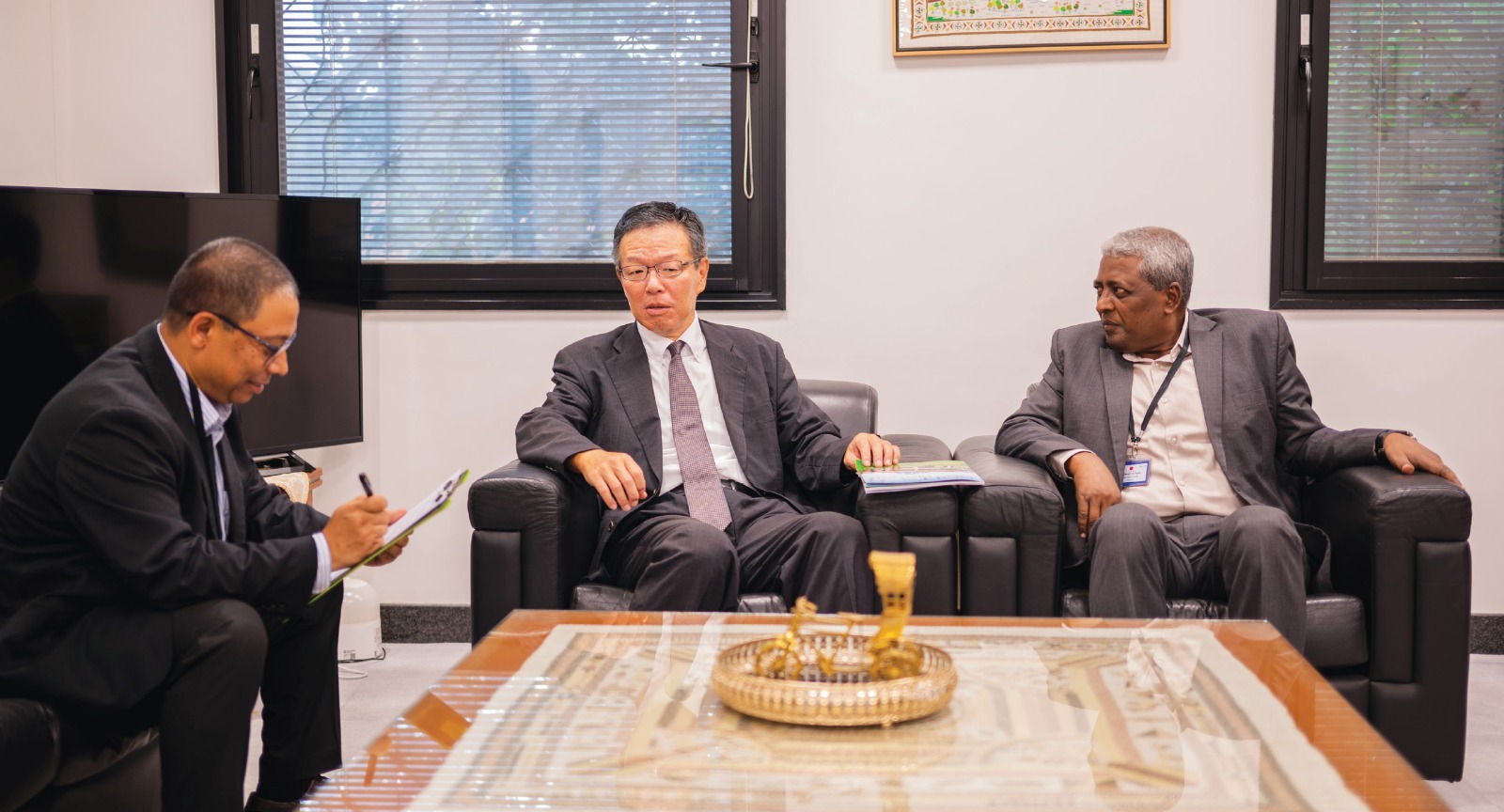
Guiding one of Asia’s most vital diplomatic partnerships, H.E. Ambassador Saida Shinichi represents Japan in Bangladesh with a focus on shared growth and cultural synergy. Stationed in Dhaka since January 2025, Ambassador Saida brings decades of diplomatic expertise to a relationship spanning infrastructure, trade, and people-to-people bonds. Over the past half-century, Japan and Bangladesh have nurtured a friendship built on trust and development, with Japan becoming Bangladesh’s largest bilateral development partner in areas ranging from metros to education. Mr Md Zahirul Islam, Editor, and Mr Md Nasimul Hoq Majumder of Golf & Beyond sat down with him to discuss Japan’s vision for Bangladesh’s future — and the unexpected role of golf in diplomacy — in an open, engaging conversation.
Ambassador Saida, Japan is Bangladesh’s largest development partner. How is Japan aligning its support with Bangladesh’s goals for LDC graduation and “Smart Bangladesh”?
Our partnership is both strategic and forward-looking, aligning closely with Bangladesh’s aspirations as it prepares to graduate from Least Developed Country status in 2026 and pursue the ‘Smart Bangladesh’ vision by 2041. To ensure a smooth transition, we focus on three key pillars:
- High-Quality Infrastructure: Japan is investing in critical megaprojects like the Matarbari Deep Sea Port, Dhaka Metro Rail, and the Jamuna Railway Bridge. These high-quality infrastructure projects will boost connectivity, reduce logistical bottlenecks, and enhance Bangladesh’s competitiveness in trade. For example, the Dhaka Metro is already easing traffic and improving daily commutes, and Matarbari — Bangladesh’s first deep-sea port — will greatly expand capacity for exports and imports. We are committed to seeing these through because strong infrastructure lays the foundation for a thriving post-LDC economy.
- Economic Modernization: We support Bangladesh’s drive to modernize its economy. This means encouraging private investment in manufacturing — from automotive and motorcycle assembly to electronics — as well as in energy and digital industries. Japan is helping develop Special Economic Zones, such as the Japanese Economic Zone in Araihazar, to attract quality investment. Through initiatives by JICA and JETRO, we are transferring technology and business know-how. The goal is to diversify Bangladesh’s industrial base and move up the value chain so the country can compete globally in high-value sectors. We are also facilitating an Economic Partnership Agreement to boost trade in the long term, aligning with Bangladesh’s post-graduation needs.
- Human Capital & Sustainability: Building people’s capacity is pivotal for sustainable growth. Japan is training a growing number of Bangladeshi professionals and skilled workers — in Japan and at home — so they can drive the economy after graduation. We are partnering on climate-resilient agriculture projects to help farmers adapt with better technology and practices. Through various programmes, we promote STEM education and innovation among youth. This pillar ensures that inclusive growth happens — that Bangladesh’s development is people-centric, environmentally sustainable, and leaves no one behind even as it graduates from LDC status.
Cultural ties seem stronger than ever — especially among youth. How is Japan fostering this connection?
Youth engagement is absolutely pivotal to our cultural diplomacy. I believe the next generation forms the bridge between our two nations. Every year, we sponsor around 150 Bangladeshi students through MEXT scholarships to pursue studies in Japan — and many return home with not just degrees, but also a love for Japanese language and culture. Programmes like JENESYS invite young Bangladeshis to Japan for short-term exchanges, where they experience Japanese life firsthand.
I have met students who came back from a JENESYS trip truly inspired — they stayed with Japanese host families, attended local schools, and built friendships that last to this day. Such immersive experiences foster meaningful cross-cultural understanding and dispel stereotypes.
In Dhaka, we try to bring Japan closer to Bangladeshi youth. The Embassy regularly hosts vibrant cultural events — from traditional tea ceremony demonstrations and Ikebana flower arrangement workshops to anime and manga festivals. You would be amazed — thousands of young people show up, whether it is for an anime cosplay event or a Japanese film screening. Just last month, we organised a Japanese film festival, and the halls were packed with university students.
These initiatives do more than just showcase our culture; they cultivate genuine friendships. When a Bangladeshi student learns a Japanese song or a Japanese young person tries Bangladeshi biriyani, it creates a warm connection. We also support Japanese language learning — the interest is growing fast, with many young Bangladeshis eager to study or work in Japan. All of this builds enduring bridges between our countries. In a way, cultural ties are the heartstrings that tie Japan and Bangladesh together, led by the energy and curiosity of youth.
Beyond aid, how is Japan catalysing private investment in Bangladesh?
Japanese companies see Bangladesh as a land of opportunity and are eager to invest for the long term. As an Embassy, we are working hard to make the investment climate more inviting. One major initiative is developing the Araihazar Special Economic Zone near Dhaka. It is the first dedicated Japanese economic zone here, a joint effort with the Bangladesh government. We are providing world-class infrastructure and one-stop services in that zone to encourage companies to set up factories.
I am happy to share that several companies have already started building facilities there, ranging from light engineering to electronics. We anticipate dozens of Japanese manufacturers — potentially household names from Toyota to Mitsubishi — will establish operations, bringing in technology and creating thousands of local jobs. This could attract around $1 billion in investment when fully occupied, which will be transformative for the local economy.
We are also supporting energy stability because investors need reliable power. Japanese firms are involved in Bangladesh’s LNG power projects and expanding renewable energy like solar farms. For instance, Japan’s JERA has invested in major power plants here, and we are sharing expertise to help Bangladesh develop a cleaner, stable energy supply. A stable energy grid powered by modern LNG terminals and solar parks means factories can run at full capacity and new industries can flourish.
Another area is helping key sectors modernise. Take textiles and garments — the backbone of Bangladesh’s economy. Japanese technology is being introduced to automate and improve efficiency in textile production so that Bangladesh can remain competitive globally. We are encouraging a move into higher-value sectors too, like automotive parts, electronics assembly, and agribusiness. For example, some Japanese agritech companies are exploring food processing and cold chain logistics here, which can really add value to Bangladesh’s agricultural produce.
All these efforts combined are catalysing private investment by addressing the bottlenecks that used to worry investors. And it is paying off — over 300 Japanese companies already operate in Bangladesh, and that number has been rapidly growing. In fact, the Japanese business community here has grown threefold in the past decade. This surge shows the confidence our private sector has in Bangladesh. We are moving beyond the traditional donor-recipient relationship to a true economic partnership fuelled by trade and investment.
Having lived in Dhaka for some time, what has moved or inspired you most about Bangladesh?
Honestly, I continue to be deeply moved by the resilience and warmth of the Bangladeshi people. There is a palpable energy in Dhaka’s daily life — whether I am navigating the bustling streets of Kawran Bazar or attending a family gathering, I feel a strong communal spirit everywhere. Even in the face of challenges like traffic or floods, people remain upbeat and hospitable.
For example, during Pohela Boishakh (the Bengali New Year), I joined the celebrations in Ramna Park — it was incredible. Thousands of people in colourful traditional attire, music and cultural processions, everyone smiling and welcoming — the sheer joy and unity on that day left a deep impression on me. It showed me how proud Bangladeshis are of their heritage and how they come together as a community to celebrate life.
I am also inspired by the youth here. Bangladesh has a very young population, and whenever I meet students or young professionals, I am struck by their ambition and global outlook. Many of them speak multiple languages — I have met Bangladeshis who spoke fluent Japanese, which of course made me very happy! Their digital savvy is remarkable too; young entrepreneurs here are creating apps, starting tech companies, and some are collaborating with Japanese start-ups.
That drive and creativity signal a very promising future for the country. I recall visiting a university event where a team of Bangladeshi students showed me a robotics project they were working on — it was so impressive and also heartwarming to see they were eager to connect with Japanese tech institutes for mentorship. It is clear the new generation is ready to take Bangladesh to new heights.
And let us not forget the food! (He laughs.) I have to admit, I have fallen in love with Bangladeshi cuisine. The biriyani here, especially a plate of Old Dhaka’s famous kacchi biriyani with its aromatic rice and tender meat, is simply irresistible — it really stimulates my appetite. My local friends have also introduced me to dishes like hilsa fish curry and pitha (rice cakes), and I enjoy them all. Sharing meals has been another way I have experienced the famed Bangladeshi hospitality — whenever I visit someone’s home or even a village, they will not let me leave without a hearty meal. Through those conversations at the dining table, I have learned so much about the country. So, in summary, it is the Bangladeshi people — their resilience, kindness, vibrant culture, and youthful energy — that inspire me every day in this posting.
Golf & Beyond readers share a passion for the sport. Have you experienced Bangladesh’s golf culture? Can golf strengthen ties between our countries?
Absolutely. Golf is a wonderful common ground — it really does transcend borders. I have had the pleasure of playing at Kurmitola Golf Club in Dhaka, and it is a gem of a course. The first time I played there, I was struck by how lush and challenging the layout is. The fairways are lined with beautiful trees, and there are water hazards that definitely test your nerves.
One moment you are feeling that tense excitement trying to make par over a water hazard, and the next moment you are enjoying the peaceful retreat of being in so much greenery, away from the city’s hustle. It is hard to believe you are in the middle of a megacity when you are out on that course.
I have also noticed the strong golfing community here — many of my fellow diplomats and Japanese executives in Dhaka join local tournaments or weekend rounds. Just like in Japan, here too business conversations often continue on the golf course. In fact, some Japanese and Bangladeshi business partners have told me they sealed important deals after a friendly golf match. The sport creates a relaxed environment where trust and camaraderie can grow.
Golf can indeed strengthen our bilateral ties. Sports diplomacy is a real thing — when our professionals or even amateurs meet on the course, they share tips, congratulate each other on a good swing, and a friendship is born. With Japan producing world-class golf stars like Hideki Matsuyama, who inspired many after winning the Masters, there is growing interest in the game.
We see potential for junior golf exchanges between Japan and Bangladesh. Imagine young Bangladeshi golfers training in Japan, and Japanese golfers coming here to play friendly matches — they would not only learn new skills but also understand each other’s cultures better. We already exchange a lot in education and business; why not sports? Sport, like diplomacy, thrives on shared passion and respect.
When two people enjoy a round of golf together, they communicate on a personal level beyond titles and nationalities. I have found that a simple game of golf has helped me connect with people here in a way formal meetings sometimes cannot. So yes, golf is another avenue to deepen friendship. Plus, it is a lot of fun!